
Bringing a new baby home is an overwhelming mix of joy and exhaustion. While parents naturally focus on things like feeding schedules and safe sleep, there is a profound, quieter benefit to those early weeks: parent-infant bonding and secure attachment.
The physical space where your baby sleeps can play a surprisingly powerful role in strengthening this emotional connection. This is where the practice of room-sharing, keeping your baby in your bedroom in a separate, safe sleep space shines. It’s more than just a safety guideline; it’s a blueprint for deeper emotional health for both you and your baby.
Here is why sleeping close, but separate, fosters a calmer connection and supports your baby’s early development.
1. The Power of Sensory Connection
Newborns thrive on the sensory world they experienced in utero. The closeness afforded by room-sharing beautifully extends that environment:
- Hearing: Your baby is continuously soothed by the sound of your steady breathing and your familiar voice, which acts as a regulatory tool for their developing nervous system.
- Smell: Your unique scent provides immediate comfort and security. This closeness helps the baby feel safe, making it easier for them to settle and remain calm.
This constant, gentle sensory input reinforces the infant’s trust in their caregiver and forms the foundation of secure attachment.
2. Immediate Responsiveness Builds Trust
The biggest developmental benefit of room-sharing is how easily it allows a parent to respond to their baby’s needs. When a baby cries or stirs, and a parent is able to respond almost immediately, whether with a touch, a shush, or a feed, it teaches the baby a critical lesson: “I have needs, and my needs will be met.”
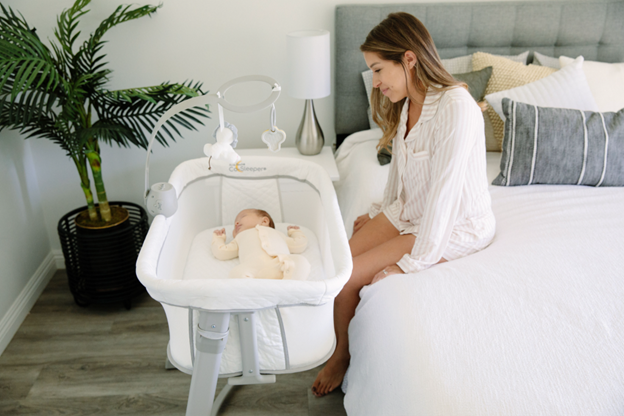
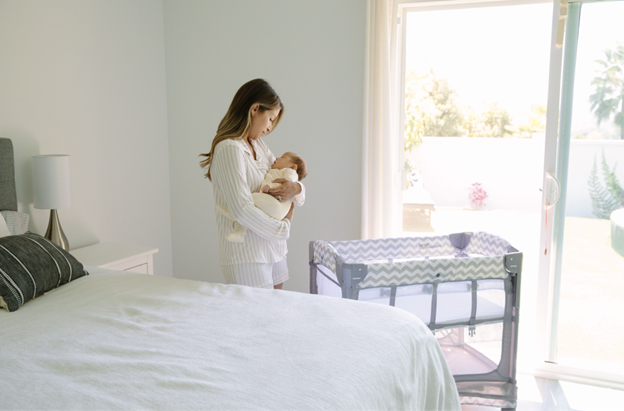
This cycle of quick responsiveness is essential for emotional health. It fosters a feeling of security and helps the baby learn to regulate their own emotions over time. When your baby sleeps right next to you, perhaps in a certified bedside sleeper like the Arm’s Reach Co-Sleeper® bassinet, those quick responses become seamless, happening before the fuss escalates.
3. The Gentle Weaning of Independence: The Big Transition
While closeness is vital in the early months, all babies eventually graduate to their own crib and, often, their own room. Room-sharing, particularly with a bedside bassinet, offers a gentle bridge to this independence.
Parents can utilize developmental milestones to guide the transition timeline:
- The Roll Over Marker: Pediatricians recommend transitioning the baby when they are around 6 months old, or when they show signs of rolling over, pushing up on their hands, or exceeding the weight limit of the bassinet.
- The Power of Proximity: Because the baby has already learned to sleep safely next to the parent, the move to a crib in the same room (or eventually, their own room) is less jarring. They have already learned how to fall asleep in their own space, separate from the parental bed.
When it’s time to transition the baby, move the bassinet (or crib) incrementally farther away each week, or simply keep the crib in the room for a few extra months. This slow, deliberate shift honors the child’s need for security while gently introducing the concept of independent sleep.
Room-sharing is a powerful tool that transforms the sleep environment from a simple matter of logistics into an opportunity for deep, restorative bonding. By keeping your baby close and within reach, you are doing more than just simplifying the night—you are laying the emotional groundwork for a lifetime of secure connection.